

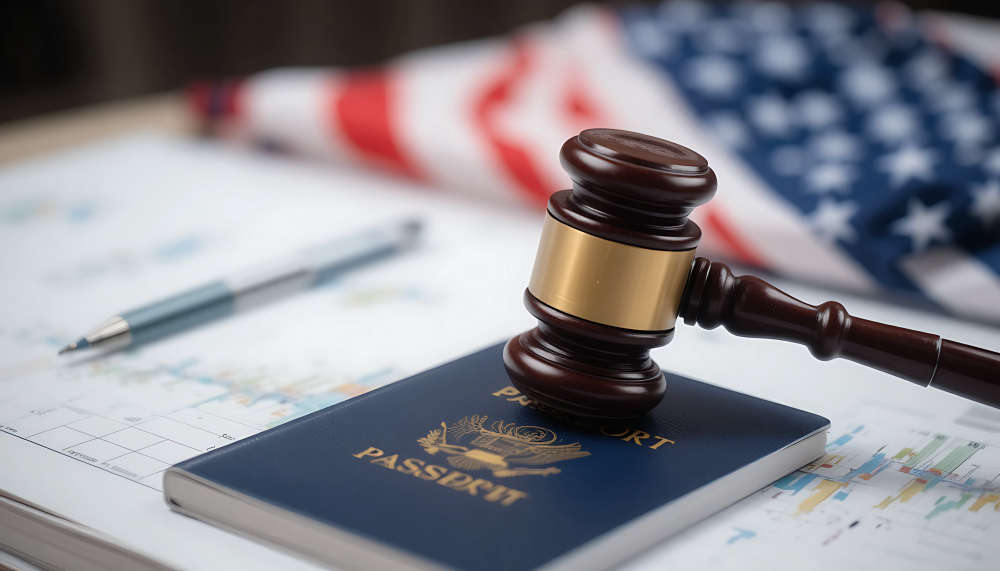
The decision reaches ports of entry in Vermont’s border region with Canada and could influence how often Customs and Border Protection officers examine electronic devices.
Travelers entering the United States through Vermont and other parts of the 2nd Circuit can have their phones inspected by federal agents without a warrant or any individualized suspicion, according to a ruling issued last month by the U.S. Court of Appeals for the 2nd Circuit.
The decision reaches ports of entry in Vermont’s border region with Canada and could influence how often Customs and Border Protection officers examine electronic devices. Scott Wilkens, a senior counsel at the Knight First Amendment Institute at Columbia University, said the ruling may encourage more searches than agents already conduct.
The case grew out of a 2024 prosecution in New York City involving bank fraud and money laundering. After the defendant was arrested and later convicted, federal agents at a New York City airport searched his phone twice when he returned from trips overseas and found evidence used against him at trial. He challenged the lower court’s refusal to exclude that material.
In the majority opinion, Judge Steven J. Menashi wrote that border officers may manually review a phone or similar device without first establishing a reason to do so. He compared a cellphone to ordinary property such as a suitcase or notebook and concluded that existing precedent does not require reasonable suspicion before a search at the border.
Menashi was appointed by President Donald Trump, and his 2019 selection drew criticism because he had served as a lawyer in Trump’s first administration. He was joined by a judge appointed by former President Joe Biden. Another Biden appointee wrote separately in agreement, though with reservations.
The federal government has long exercised wide latitude to inspect belongings brought into the country, including those of U.S. citizens. At the border, standard Fourth Amendment protections are limited. Immigration authorities also have broader powers within 100 miles of the border, a zone that includes nearly all of Vermont.
According to Wired, searches of cellphones at the border reached about 15,000 last year after Trump returned to office and intensified enforcement efforts. Customs and Border Protection says device searches are rare, but it also says they can help uncover drug trafficking, human smuggling, digital contraband and other crimes, as well as determine a traveler’s purpose for entering the country.
The 2nd Circuit had not previously resolved whether officers need any level of suspicion before going through a device. Other appellate courts have addressed the issue and, in general, have allowed warrantless phone searches at the border, though the reasoning has differed from circuit to circuit.
Wilkens said the ruling applies across the 2nd Circuit, including Vermont crossings, and that it mainly concerns manual searches done while a traveler is present. He added that if a person refuses to unlock a phone, agents may seize it and use technical tools to pull data from it, though the court did not decide whether suspicion is required for that more invasive step.
The Knight Institute had urged the judges to impose a higher threshold even for manual inspections, arguing that journalists and others crossing the border need stronger protection. Wilkens said the court treated smartphones and laptops too much like ordinary objects and ignored the scale of private information they contain. He warned that the ruling could lead to more searches in Vermont and elsewhere, and could cause travelers to censor themselves before crossing the border.
He said the issue may eventually reach the U.S. Supreme Court, either through this case or another one in the years ahead.
 Bennington Man Faces Several Charges in Readsboro Incident
 Vermont leaders gather to honor former House Speaker Ralph Wright
 Brattleboro man accused of hitting teen with vehicle
 Ballots for Vermont general election arrive later than planned
 Brattleboro man charged after juvenile injured in Fairground Road crash


Comments
Add a comment