

Vermont's legislative body is poised to make no significant moves this year regarding greenhouse gas emission policies.
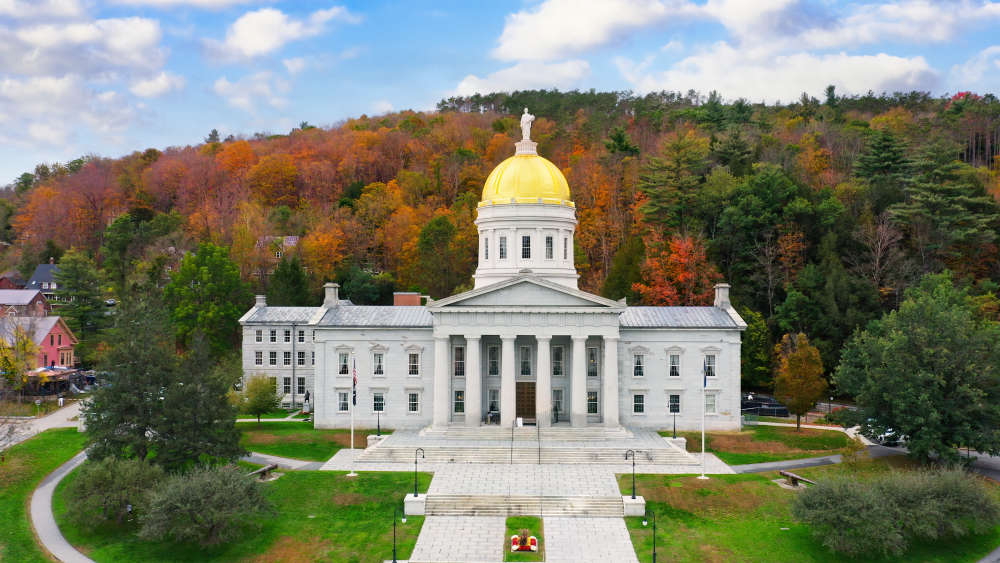
In Montpelier, Vermont's legislative body is poised to make no significant moves this year regarding greenhouse gas emission policies, leaving the state at risk of contravening its obligations under the Global Warming Solutions Act. This act, enacted in 2020, mandates a series of benchmarks for emission reduction aimed at meeting international standards set by the Paris Agreement, with explicit targets to reduce greenhouse gases to 26% below 2005 levels by 2025, 40% below 1990 levels by 2030, and 80% by 2050.
As the deadline approaches, the administration has expressed concerns that the state failed to meet its projected goals for 2025. Despite these pressing issues, the Democratic majority in the legislature appears hesitant to advance significant policy changes, largely due to the expectation that any substantial proposals would meet resistance from Republican Governor Phil Scott, who has a history of vetoing key climate initiatives.
Members of the House confirmed that there are no comprehensive policy frameworks in place for this year's session that would address emission reductions. Within the legislature, some Democratic leaders view the current landscape as not conducive for transformative policy changes, with one senator acknowledging a lack of confidence that the governor would support measures necessary to alter the state’s trajectory on emissions.
Tensions have risen between Democrats and the governor's administration, with accusations exchanged over who is responsible for the stalemate. While Democrats criticize Scott for his reluctance to collaborate on fiscal measures that could assist Vermont in achieving its environmental targets, Scott's office contends that prior commitments made by Democrats lack consideration of the associated costs, potentially burdening Vermonters.
Efforts in previous years to implement renewable energy standards for heating have faltered, with a notable clean heat standard ultimately failing despite an override of a veto on a related clean energy bill. There has been criticism of the administration's portrayal of the costs associated with proposed energy policies, which some lawmakers feel may have influenced the public's perception and acceptance of such initiatives.
This week, the House took a step toward addressing the data collection necessary for evaluating fossil fuel sales with the introduction of bill H.740, aimed at enhancing local monitoring of fuel usage. House representatives advocate that obtaining more granular data would provide a clearer picture of local emissions and help formulate more effective environmental policies.
Debate continues over the implications of this proposed legislation, with critics viewing it as paving the way for more costly policies that, they believe, could disadvantage Vermont residents economically. Some legislators emphasize the need for tangible, locally-driven solutions to bolster the state's environmental efforts, especially as federal climate policy faces uncertainty.
As Vermont navigates its commitments under the Global Warming Solutions Act, the challenges will require a balance between legislative action, executive approval, and public support to meet the state’s ambitious climate goals.
 Vermont House Approves $9.3 Billion State Budget
 I-89 Northbound Opens After Pepsi Delivery Truck Falls from Bridge in Richmond
 Stowe teen Dean Roy poised to make history as youngest candidate on Vermont’s general election ballot
 New Tax Proposal Targets Wealthy Individuals in Vermont’s Budget Discussions
 Vermont Sugar Producers Relying on Migrant Workforce for Maple Harvest

Comments
Add a comment